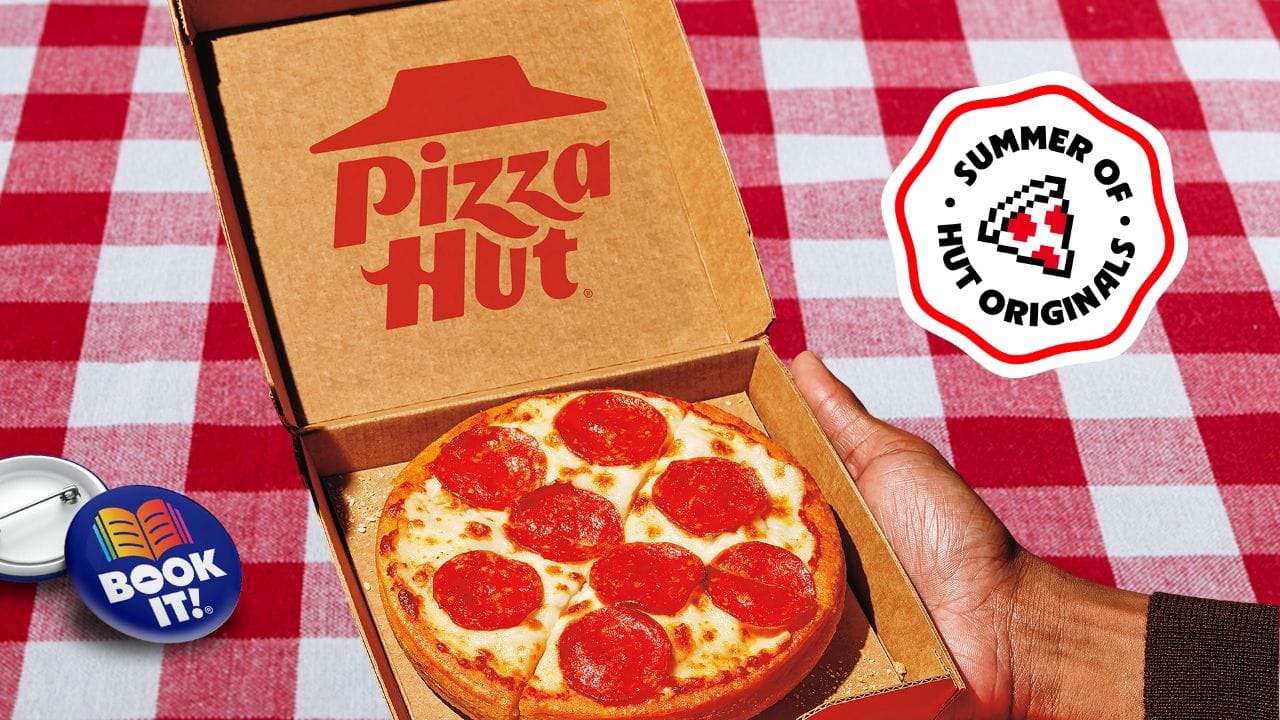
Pizza Hut banks on childhood memory and educational goodwill to capture market share. The chain revived its legendary Book It program, pairing the initiative with Box Tops for Education to create what it calls "Hut Originals," a nostalgia-driven platform targeting parents who grew up earning free pizza coupons for reading achievements.
The Book It program dominated American elementary schools for decades, rewarding students with personal pan pizzas for meeting monthly reading goals. The initiative shaped eating habits and brand loyalty for millions. Pizza Hut's decision to resurrect it reflects a broader industry shift: nostalgia sells, especially when bundled with purpose.
The Box Tops partnership amplifies the emotional play. Schools earn money when families scan digital codes on Pizza Hut boxes, creating a virtuous cycle where dining decisions directly fund education. Parents justify pizza purchases as charitable acts. Children experience the same reading incentive their parents remember. Pizza Hut strengthens community ties without heavy advertising spend.
This move arrives as fast-casual pizza chains like Blaze and MOD Pizza fragment the market. Independent pizzerias capture diners seeking authenticity. Pizza Hut's "Hut Originals" platform acknowledges that competing on speed or innovation no longer works. Instead, the chain weaponizes memory.
The strategy carries risks. Nostalgic appeals work only if the product delivers. Pizza Hut's quality debates persist. Pricing pressures intensify as consumers scrutinize value. Yet the Book It relaunch taps into something deeper than menu items: parents want their children to experience what made their childhoods special, and they'll order pizza to make it happen.
The collaboration demonstrates how established chains survive disruption. By resurrecting programs that shaped cultural moments, Pizza Hut transforms a casual meal into something families feel good about. Nostalgia, when executed with