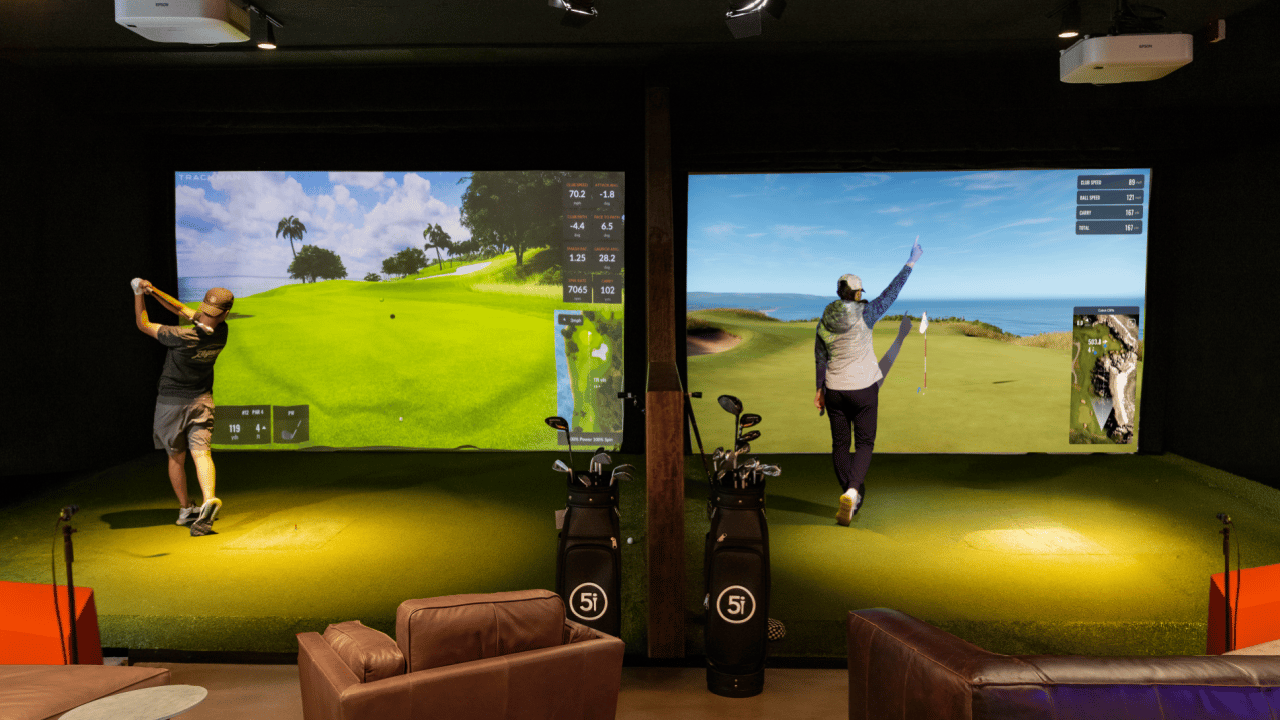
Five Iron Golf has expanded beyond its entertainment venue model to launch competitive tournaments where customers can wager real money on their performance. The golf entertainment chain operates indoor golf simulators across multiple U.S. locations, transforming the traditional driving range experience into a gaming and hospitality destination.
The tournament format allows golfers to compete against others in real time across Five Iron Golf's venue network. Players can enter competitions with actual cash stakes, adding competitive stakes to the simulator experience. This move positions Five Iron Golf as a sports betting and entertainment hybrid, capitalizing on the growing legalization of sports wagering across American states.
Five Iron Golf locations function as social golf clubs with full-service bars, food offerings, and simulator bays. The venue concept attracts both serious golfers and casual players seeking entertainment. By introducing tournament play with monetary prizes, the company targets competitive players willing to spend beyond standard simulator rental fees.
The timing aligns with the broader expansion of legal sports betting in the U.S. States have progressively licensed online and in-person wagering, creating regulatory frameworks for gaming venues. Five Iron Golf's tournament structure operates within these emerging guidelines, offering what amounts to peer-to-peer competitive gaming rather than traditional sportsbook betting.
This represents a shift in how entertainment venues monetize customer engagement. Beyond bar sales and hourly simulator fees, Five Iron Golf now captures tournament entry fees and potentially revenue sharing from wagered amounts. The model tests whether customers will commit additional spending when competitive stakes rise.
The move also reflects changing consumer expectations around dining and entertainment venues. Customers increasingly seek experiences that combine socializing, gaming, and competition. Five Iron Golf's tournament launch suggests venues can stack multiple revenue streams by layering entertainment, hospitality, and competitive gaming under one roof.
For the golf entertainment sector, this signals that simulator golf has matured beyond novelty status. Chains can now position themselves as legitimate competitive venues where outcomes matter