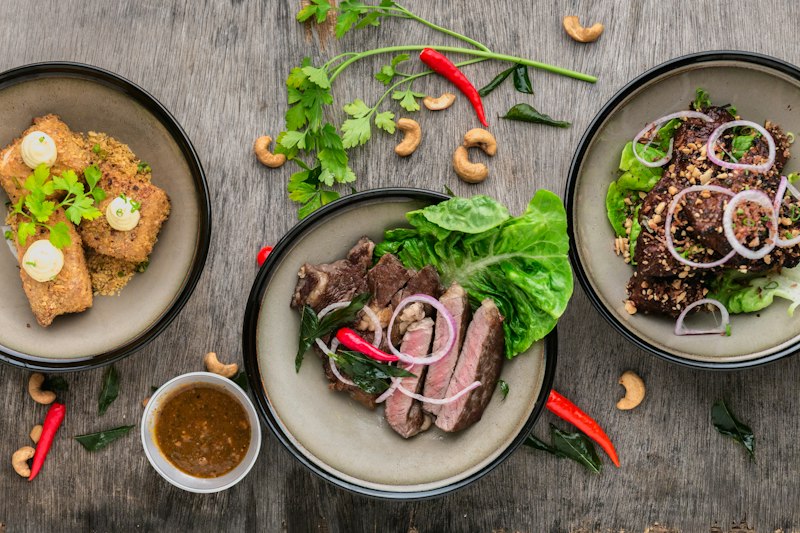
"Dip Dinner" is trending. If you haven't caught wind of it yet, the concept is simple: gather a spread of dips, pair them with vehicles for consumption (crackers, vegetables, bread), and call it dinner. No cooking. No elaborate plating. No Instagram-worthy deconstructed elements that require a culinary degree to assemble.
It's the kind of trend that makes industry analysts scratch their heads. Where's the innovation? Where's the margin? Where's the story?
Yet this trend whispers something crucial that the restaurant industry desperately needs to hear: consumers are experiencing decision fatigue at scale, and they're voting with their forks for simplification.
Consider the current landscape. Restaurant menus have exploded into unwieldy tomes of choice. Limited-time offerings rotate with dizzying speed. New "flavor combinations" launch constantly, each demanding attention and shelf space. QR code ordering, app-exclusive deals, subscription models, and loyalty program tiers create friction where there used to be frictionless transactions. Even fast-casual chains, once positioned as the answer to casual dining's complexity, now offer customization menus that rival fine dining in their granularity.
This is where the real divide in the industry will emerge.
The operators who recognize that "dip dinner" isn't actually about dips will win. It's about permission. It's about the liberating idea that dinner doesn't require a performance. It doesn't require novelty. It doesn't require you to chase the latest trend or decode a cryptic menu item.
We've seen early signals of this shift. The success of brands like Clover Food Lab and the strategic repositioning of retailers like Target's grocery department suggest that consumers want clarity and intentionality, not more options. Taco Bell can engineer Fire Sauce to hit specific flavor notes, but what diners often crave is simply knowing what they're getting.
The winners in the next operational cycle won't be the chains adding another limited-time flavor or launching the next viral menu hack. They'll be the restaurants that recognize when to stop innovating and start clarifying.
This might sound counterintuitive in an industry obsessed with novelty. But there's a difference between strategic innovation and noise. A restaurant that tests new suppliers or refines execution on core items is innovating. A restaurant that launches 15 new SKUs annually while core operations suffer is just adding complexity.
Simplification also has operational advantages that are rarely discussed. Fewer menu items mean tighter supply chains, better inventory management, and staff that actually knows what they're serving. It means faster training and fewer mistakes. It means your equipment manufacturers understand your workflow instead of constantly retrofitting for new preparation methods.
The "dip dinner" trend also reveals something about authenticity that marketers should note. It's genuinely trending because it solves a real problem for real people. It wasn't engineered by a trends forecasting firm or promoted through coordinated influencer campaigns. It emerged organically from consumer behavior. That's the kind of insight money can't buy.
Here's my prediction: within 18 months, we'll see at least one major chain position itself explicitly around "less is more." They'll cut their menu in half. They'll actually advertise simplicity as a feature, not a limitation. And they'll gain both operational efficiency and customer loyalty, because they'll have solved the exhaustion problem that extends far beyond food.
The operators who add another sauce, another protein option, another trendy preparation method are building tomorrow's problem. The ones who subtract, who edit, who have the courage to say "no" to good ideas in service of great execution, are building tomorrow's winners.
Dip dinner gets it.